
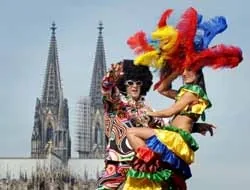
In February, almost all of Europe holds carnivals//Photo by «era» agency
AUSTRIA
Ball season, until March 10, Vienna. February balls in the Vienna ball season are considered the most spectacular and prestigious. During the ball season, special schools operate in the city, offering various crash courses in different styles of ballroom dancing. On February 9, the Coffee Ball will take place at the Hofburg, where guests, in addition to the traditional program, will be offered hundreds of varieties of coffee and pastries. On Valentine's Day, the most romantic Strauss Ball will be held at the Kursalon with music from the 17th-19th centuries. But the most prestigious is considered the ball at the Vienna Opera, which will take place this year on February 15. Stars of theater, politics, and businessmen from around the world gather at the Opera Ball to dance the waltz, foxtrot, rumba, and swing. Performances by opera stars are the main feature of this ball. www.soundofvienna.at www.hofburg.com www.staatsoper.at
BELGIUM
Music in Mind Festival, February 14-24, Bruges. This alternative music festival is the winter counterpart of the famous «Cactus» festival, renowned for its mix of styles and genres. Only new avant-garde music that doesn't fit into show formats will be presented at this festival, which will take place at the Concertgebouw concert hall. Among this year's participants are An Pierle & White Velvet, Trixie Whitley, Tuxedomoon, 4hero, Guillemots, The Low Lows. //www.musicinmind.eu
Carnival, February 18-20, Binche. Carnival traditions in Belgium have ancient roots: the first written mention of the carnival in Binche dates back to the end of the 14th century. This ancient town becomes the main carnival center, where so many tourists gather annually that their number is ten times the local population. On the first day of the carnival – "Fat Sunday" – processions of mummers take place in Binche, among which the most piquant are hefty men dressed in women's clothes and women with beards and mustaches, exchanging brutal jokes with "mamselles."
Monday is mainly devoted to folklore concerts, and the main day of the carnival is, of course, "Fat Tuesday." It is then that the Gilles appear on the streets – identical hunchbacked bespectacled figures in bright costumes, who have become a symbol of Belgian carnivals. By the way, not just anyone can become a Gilles – this honorable carnival duty is only passed down by inheritance. Their march in hats with huge feathers will be the main event of the carnival. You must catch the oranges that the Gilles throw into the crowd – then the year will be successful. www.carnavaldebinche.be
GREAT BRITAIN
Viking Festival, February 14-18, York. In the 9th century, York was the capital of the Viking kingdom for a full 50 years and was then called Jorvik. This period of the city's history is dedicated to the exhibition of a unique museum – the Jorvik Viking Centre, as well as the annual February "living history" festival. The festival program is packed to the brim: every day the celebration starts at 10 a.m. and ends only at midnight. At the festival, you can see strength competitions and Viking duels, theatrical wedding and funeral ceremonies, as well as large Viking battles. At the festival, you can make your own costume under the guidance of experienced designers, visit a special archaeological exhibition, and listen to live medieval music.
The main festival novelty this year is the so-called "Journey to Valhalla" (€3). The festival will have a fair operating daily, where visitors can learn about traditional crafts and the specifics of preparing authentic Viking food, as well as buy genuine handmade souvenirs. www.jorvik-viking-centre.co.uk
Exotic Flowers and Orchids Festival, February 3 - March 4, Richmond. Not far from London in the small town of Kew (near Richmond) are the world-famous Royal Botanic Gardens. Here an exhibition of tropical plants, exotic flowers and orchids of all varieties takes place. Incidentally, about 300 new species of orchids appear every year, and the festival organizers always show them to visitors. Rare anthuriums, marantas with asymmetrical flowers, tropical representatives of the pineapple family – all this can be seen close together, in one country, in one garden. Since the festival covers an important date for many – February 14, the organizers have come up with special events on this day: a four-course dinner with good wines surrounded by fragrant plants (€99.5 per lover) or a romantic walk through the greenhouse with champagne and sandwiches (£49.5 per lover). www.rbgkew.org.uk
Up Helly Aa Festival, February 16 and 23, many towns in the Shetland Islands. In Lerwick, this famous festival – a Viking torchlight procession – takes place on the last Tuesday of January, while on the penultimate and last Sundays of February, Up Helly Aa is celebrated in many small towns of the Shetland Islands. The roots of the festival go back to the early Middle Ages (9th century) and are associated with repeated Viking attacks on the archipelago.
The usual scenario of this festival is this: locals dress in the clothes of ancient warriors, light torches and march behind a giant Viking longship through the streets, blowing war horns. The festival ends late in the evening with an ancient rite of burial of dead warriors – burning a wooden Viking longship. www.visitshetland.com
GERMANY
Cologne Carnival, February 15-21, Cologne. The most famous carnival in Germany is, of course, the Cologne Carnival. Its scenario often serves as a model for carnivals in other German cities. It was revived in 1823 by local romantic intellectuals, and the traditions of its celebration have remained unchanged since then. This carnival opens at 11:11, and its last week will be the most spectacular.
So, from February 15 («babiy chetverg») one should expect the real culmination and denouement of the «fifth season». On February 17 there will be the traditional Funkenbiwak, on February 18 a children's parade, but the most important day of the carnival will be «pink Monday» (February 19), whose name is not related to roses but to madness (rasender Montag). On this «crazy» day, a 7 km long procession will pass through the city, and from the carnival floats they will throw candies, chocolates, and small bouquets of flowers into the crowd. The quickest arrive early, take particularly candy-rich spots, open and invert their umbrellas – that way you catch more. On February 20 the fun will continue, but spontaneously and by inertia, and on the night before Ash Wednesday in Cologne they will burn doll-like «nubbel», symbolizing cold and illnesses. This will mean that carnival time is over.
By the way, since the 90s of the last century, an alternative, «intellectual» carnival has also been held in Cologne, differing from the official one in themes and level of jokes. As they like to say in Cologne, «every jester jokes in his own way». www.koelnerkarneval.de
Carnivals, February 9-21, Bremen, Düsseldorf, Mainz, Berlin, Frankfurt am Main and other cities. Traditional carnivals on the eve of Lent will take place in almost all German cities. The main characters on these days are jesters, who long before the carnival days gather in «guilds» and «guards», rehearse songs, write jokes, jealously hiding them from rival competitors, and design costumes. Of course, each city has its own carnival traditions: in Bremen, for example, it takes place in a «Brazilian» style (February 9-10) with a fiery parade «Sambamania» at the finale.
Carnival mini-balls, children's parties will be held in German cities throughout February, but the main events of the carnivals, say, in Mainz and Düsseldorf, still unfold according to the «Cologne scenario». The culmination here, as in Cologne, will be the famous Rosenmontagszug – a grandiose procession when almost tons of candies and souvenirs are thrown into the crowd of spectators. www.bremer-karneval.de www.duesseldorf.de www.info-mainz.de \/\/karnevals-zug-berlin.de
International Berlin Film Festival, February 8-18, Berlin. So the program of the 57th Berlin Film Festival has finally been determined, which will present 26 films in the competition program, including many world premieres. The competition program of Berlinale 2007 included films «The Good Shepherd» by Robert De Niro, «The Good German» by Steven Soderbergh, «Goodbye Bafana» by Danish director Bille August, «Irina Palm» by Belgian director Sam Garbarski. The festival will conclude with the world premiere of François Ozon's film «Angel». The retrospective part of the film festival will be dedicated to the art of silent cinema. Particularly noteworthy is the screening of the restored color version of «Hamlet» by Danish actress and director Asta Nielsen. www.berlinale.de
GREECE
Carnivals, February 1-19, Athens, Patras and other cities. February is carnival month in Greece, and the carnival capital is considered the small city of Patras. But the largest and most spectacular carnival takes place in Athens, and it is famous for its democracy and eclecticism. Here you can see, as at any carnival, processions of masqueraders, dance both fiery Greek dances and samba and tarantella, listen to serenades, jazz music, and rock – in short, spin around in the carnival action and feel a little crazy. Be sure to try the special carnival wine, buy whistles and foam to finally dissolve into the carnival crowd. www.athens-today.gr www.carnival-of-xanthi.gr www.rethymno.gr www.kerkyraikokarnavali.gr
SPAIN
Carnivals, February 1-19, Cadiz, Barcelona, Madrid and other cities. The ancient symbol of the Spanish carnival and at the same time a symbol of carnal pleasures and great love of life is the famous Don Carnal. On «Fat Tuesday» the doll of Don Carnal will be burned with a pompous fireworks display, to be reborn in a year, and before this event the carnival spirit will reign everywhere. The scenarios of carnival celebrations have much in common in Spanish cities: cross-dressing and dressing as animals, masquerade, a train of carnival floats, dances, songs, folk festivals.
The main events of the Madrid carnival are the masquerade ball, the final costumed procession and the famous burial of the sardine on «Ash Wednesday». And in Barcelona during the carnival, a tortilla baking contest is especially popular, in Cadiz – costume contests, a carnival cavalcade and gastronomic festivals. One of the most beloved post-carnival holidays in Cadiz – the «carousel of the choir» – will take place on February 23. www.carnavaldecadiz.com www.sitges.com www.munimadrid.es
Carnival in the Canary Islands, February 1-24, various cities. Spanish flair and Latin flavor are the distinctive features of the carnival in the Canary Islands. Afro-Cuban music and traditional Spanish zarzuela are heard here, and the dances are quite eclectic. The most famous hallmark of the carnival in the Canary Islands is the 'shootout' where confetti, metaphane and streamers fly. Previously, the 'projectiles' in such a shootout were eggs filled with talcum powder. By the way, this unique tradition is still preserved in Santa Cruz de la Palma – there the carnival takes place in clouds of flying talcum powder. But the most famous carnival, which even made it into the Guinness Book of Records, takes place in Santa Cruz de Tenerife. The carnival opens magnificently with a cavalcade, musical competitions of 'murdas' and the election of the Queen, and in general the carnival program includes a host of competitions: competition of musical groups ('rondallas'), rhythm and harmony, clown performances and comic fights. The carnival on the islands lasts a bit longer than in Europe, but after the onset of Lent it is reduced to calm and moderate music concerts. www.grancanaria.com www.puertodelacruz.org www.cabtfe.es www.carnavaltenerife.com www.laspalmascarnaval.com
ITALY
Celebrations in honor of St. Valentine, until March 5, Terni. No vulgar plush hearts – Valentine's Day in Terni is somewhat different from everywhere else. This is explained by the fact that the relics of St. Valentine are kept here. The city remembers its bishop, who suffered martyrdom in the 3rd century, and for a whole month (that is how long this holiday lasts here) tries to instill in people the idea that a life of love is a life in God. The celebration program includes prayers and special masses, thematic opera performances and music concerts, charity events, sports competitions, music contests and children's parties. Even the carnival season in Terni is quieter than in other cities. www.comune.terni.it
Carnivals, February 4-20, Venice, Viareggio, Florence, Verona and other cities. The carnival season starts in Italian cities in the first days of February. Of course, first of all, it is associated with the famous Venice Carnival, which 'grew' out of the comedy of masks. It is the mask that becomes the organizing and directing force of universal merriment, when all hierarchies and social conventions are abolished – from the first days of the carnival, when the Angel is flown from the bell tower of St. Mark's (February 11), to the last day with processions and fireworks. The theme of the Venice Carnival this year is 'Carlo Goldoni'.
The carnival in Viareggio is no less famous than the Venetian one, and is renowned for being the most colorful and funny. Its main attraction is the platforms with giant papier-mâché puppets, which are made long before the start of the parades in a huge hangar by the sea. The center of the carnival action will be the famous boulevards along the coast.
In Florence and Verona, the main festive events will take place on February 18 – a carnival train, masquerade ball, live concerts and theatrical performances. But it should be noted that even before this culminating day, there will be plenty of carnival events in these cities. www.carnivalofvenice.com www.viareggio.ilcarnevale.com www.invernoafirenze.it www.larenadomila.it
Jazz Festival, February 17 – March 30, Piacenza. When the carnival madness ends, it's best to listen to jazz. In the small town of Piacenza (Emilia-Romagna), an international jazz festival takes place in February-March. This year the festival will open with a performance by legendary jazz saxophonist and composer Anthony Braxton, who a few years ago formed a new musical ensemble – the Anthony Braxton Sextet (February 17). On February 21, there will be a concert 'Chaplin in Jazz', the famous Italian trumpeter Paolo Fresu and American jazz pianist Uri Caine will perform at the festival on February 24, and on the 28th a jazz marathon and laser show are expected. www.piacenzajazzfest.it
CYPRUS
Carnival, February 8-18, Limassol, Paphos, Larnaca and other cities. Carnivals will take place in almost all Cypriot cities, and despite some local features, they follow roughly the same scenario. It all opens with a solemn masquerade procession and the entry of the Carnival King into the city. After that, parades and processions, balls, music concerts, performances by circus performers and comedians, comic sports competitions begin – in general, as everywhere on such days. An ancient tradition also includes the naming of carnival weeks: the first is called Meat Week (Kreatini), and the second – Cheese Week (Tyrini). www.visitcyprus.org.cy
NETHERLANDS
Carnivals, February 4-21, Maastricht, Amsterdam, Den Bosch and other cities. Carnivals in the Netherlands are famous primarily for their noisy and colorful parades of brass bands. In almost all cities in February, there will be processions of mummers, theatrical performances, costume contests and music competitions, children's costume parties. It is believed that the most fun carnival takes place in Maastricht, although residents of other cities, of course, disagree – this is rather a tourist opinion. The carnival will begin with a march of brass bands through the city, which will immediately set residents and guests in the mood for lively participation in processions and masquerade costume contests. Then everyone will eagerly await the mysterious 'night of old women', and the holiday will end with the overthrow of its main symbol – the giant doll of the housewife Mouswief. On 'Ash Wednesday', instead of the burial of the sardine, in the Netherlands it is customary to eat herring and prepare for Lent. www.holland.com www.amsterdam.info www.maastrichtnet.nl
PORTUGAL
Carnivals, February 16-20, Funchal, Lisbon, Loulé and other cities. Portuguese carnivals usually start on Saturday and end on Tuesday – the last day of wild revelry before Lent. It is believed that Portuguese carnivals, in their liberation, unrestraint and liveliness, resemble Brazilian carnivals more than European ones. And no wonder: the Portuguese carnival was brought to Brazil, a former Portuguese colony, in the early 18th century.
They say the most interesting carnival with well-preserved traditions takes place on the island of Madeira in Funchal. On February 16, performances by carnival orchestras and puppet theaters are scheduled, and the main parade will take place on Saturday evening, with seven carnival groups participating – that's over one and a half thousand prepared participants. The carnival ends on Tuesday with a grand masquerade ball for everyone. www.madeiraislands.travel www.portugal.org www.cm-lisboa.pt
FRANCE
Contemporary Dance Festival Hivernales, February 23 - March 3, Avignon. The contemporary dance festival in Avignon is one of the most significant winter events in France. Daily performances, exhibitions, master classes – traditional festival events. This year's Hivernales program includes contemporary dance, dance theater, dance performance, contemporary jazz dance, Eastern and African dance, as well as salsa, flamenco, and hip-hop. Among the festival participants are choreographers Maria Clara Villa-Lobos, Dominique Boivin, Isabella Soupart. Several concerts will be held daily at the festival, allowing audiences to get acquainted with the latest trends and directions in contemporary dance. www.hivernales-avignon.com
Flower Festivals, February, Toulouse, Tarascon, Saint-Raphaël. In February, many flower festivals take place in France, which is, of course, connected with the anticipation of the approaching spring. The Violet Festival in Toulouse (February 10-11) gathers specialists in growing these flowers from all over Europe. The Orchid Festival in Tarascon (February 18 - March 4) attracts a huge number of tourists, as these flowers have long gained a reputation as the most exquisite, delicate, and expensive flower. And in Saint-Raphaël, the farewell-to-winter celebrations will coincide with the Mimosa Festival – the flower that has become a symbol of spring (February 10-18). The festival will open with a flower parade: numerous processions of carts decorated with mimosas will drive through the city streets, then the celebration will continue in a traditional carnival format. www.saint-raphael.com www.tarascon.org
Lemon Festival, February 17 – March 7, Menton. The main characters of another spring festival in France, which takes place annually in Menton, are citrus fruits. Parades featuring carts decorated with lemon structures, tastings of citrus dishes and drinks, performances by folk music groups, exhibitions with lemon installations, and fireworks in the evenings make this festival truly sunny and joyful. The festival will be held for the 74th time this year, and its current theme is unexpectedly 'India.' So this year, we can expect even more exoticism from this exotic festival. www.feteducitron.com
CROATIA
Carnival, until February 21, Rijeka. This carnival has an ancient tradition that intricately combines European and local rituals (the most interesting are perhaps the bell ringers' contest, the comic marathon, and basketball competitions in pagan masks). Among the traditional February carnival events are premieres of carnival comedies (February 3, 8, 15, and 22), masquerade balls (February 3, 10, 17, and 21), a children's parade (February 10), and the grand carnival parade, which will take place on February 18. www.ri-karneval.com.
CZECH REPUBLIC
European Film Days, February 5-13, Brno. The festival 'European Film Days' will take place first in Prague (January 25 - February 4) and then in Brno. The main principle of this festival is extremely simple – not a single Hollywood film will be shown. Introductions to European film novelties, discussions, master classes, and a night film marathon are the traditional program of this festival. This year, the festival program includes 34 feature films and 21 short films, including Carlos Saura's 'Iberia', Fausto Brizzi's 'The Night Before the Final', and Andreas Dresen's 'Summer in Berlin'. www.eurofilmfest.cz
SWITZERLAND
Carnivals, February 15–21 Lucerne; February 26-29, Basel. The traditions of holding carnivals in different Swiss cities have ancient roots and a unique local flavor. The carnival in Lucerne, for example, is famous for its monster procession, while in Basel it's the comic contest for the most off-key singing. The Basel carnival has been held since the 14th century and is considered one of the oldest in Europe. Its start is very characteristic: at four in the morning, the city wakes up to the beating of drums and the wailing of pipes, then the electricity is turned off for a few minutes, and the darkness, full of secrets and vague premonitions, is illuminated by the glow of thousands of lanterns. This 'luminous' procession marks the beginning of the carnival. A distinctive feature of this procession is that only members of carnival groups can participate. The next day, the main event takes place – the carnival 'train', a funny exchange of serpentine and confetti, and musical contests. Then there will be a children's carnival, a lantern exhibition on the city's central square, and a concert by Guggenmusik, playing ancient and modern music on wind instruments. The carnival ends with the extinguishing of the lanterns, symbolizing the end of wild revelry and the beginning of Lent. www.baseltourismus.ch www.fasnacht.ch www.luzern.org
Nyuta KUKUSHKINA.
Газета.Ru er="0">