
According to the results of a study on birth rate dynamics in Germany, the port city of Bremen leads - in this period, five times more children were born there than in the first quarter of 2006. The East is not lagging behind the West: in second place in terms of birth rate is Magdeburg, which gave the country almost 16% more infants. And in the most populous city of North Rhine-Westphalia - Cologne - in the study period, 381 more children were born than in the first quarter of last year.
Following the top three are Erfurt (12.5%) and Berlin (5%). Moreover, no sharp decline in births was registered in any of the cities where the study was conducted. Only in Kiel were 25 fewer babies born than a year earlier.
The last record birth rate in the country (both in West Germany and East Germany) was recorded in 1964. According to DDP news agency, a total of 1.357 million newborns were registered in the country. Among European countries, Germany currently ranks last in population growth: the average number of children per woman is 1.34.
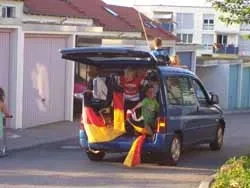
What actually motivated parents: euphoria related to last year's FIFA World Cup, or the promising reforms initiated by Family Minister Ursula von der Leyen? Professor Jan Höhm from the Max Planck Institute in Rostock believes that the introduction of an additional parental allowance from January 1, 2007 could have positively influenced the willingness to expand families. Those who became parents from that date and took parental leave receive an allowance of 67% of their last salary for 12 months. However, it is hard to imagine that the planned introduction of the allowance in January affected family planning so quickly 8-9 months earlier.
According to sociologist Martin Werding from the Institute for Economic Research in Munich, this innovation was not a decisive factor in family planning. Ursula von der Leyen herself is also in no hurry with conclusions, but nevertheless she hopes that having children will become a new trend. There is only one thing: you will have to wait for daycare places – a threefold increase in their number is planned in stages by 2013. And this fact, against the backdrop of an increase in the number of babies, cannot but worry politicians, the minister believes.
The DDP news agency reports that the results of the study published by Die Welt were met with skepticism at the German Federal Statistical Office. According to experts, despite the fact that a certain increase was recorded in the first quarter, it is too early to talk about a baby boom in the country. The press service of the office also reported that, according to preliminary data, 675,000 children were born in Germany in 2006. In 2005, that figure was 686,000. Official data for last year will be published only in July.