
Iran has begun a crackdown on dogs and Western clothing
According to Novye Izvestia, such campaigns are not uncommon in the country. However, this one differs from all previous ones in its scale. Over 70,000 police officers are involved.
The campaign to purify morals began after a bill was introduced in the Iranian parliament that equated keeping dogs at home with a crime: as it is a 'blind imitation of vulgar Western culture'. Dogs are considered 'unclean' animals in Iran. Most people prefer not to keep them at home. But wealthy Iranians living in affluent neighborhoods in northern Tehran sometimes break tradition. The bill was introduced in the Majlis (parliament) following a fatwa by the authoritative Ayatollah Makarem Shirazi, who stated that keeping dogs at home is contrary to Islam.
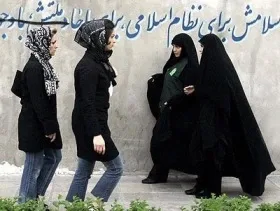
Residents of the Islamic Republic of Iran are no strangers to a strict dress code. Women have it the hardest: regardless of the season, they are required to wear clothing that covers not only their bodies from head to toe but also their hair. Until recently, they could only swim, even in the worst heat, in full attire.
However, a few years ago, on the coast of the Caspian Sea in the northern province of Mazandaran, the country's only women's beach opened, where Iranian women are allowed to swim without restrictive clothing. It is separated from the rest of the beach by a high barrier made of special plastic that extends about 100 meters into the sea and has a one-way mirror effect. It reliably shields bathers from men's immodest looks while they can see everything happening on the public beach. Men are allowed to wear short-sleeved shirts, but shorts and men's neck chains are strictly prohibited. Members of the stronger sex are strictly forbidden from baring their chests. Only in recent years have athletes been allowed to compete in shorts, and wrestlers in wrestling tights.
The majority of Tehran residents view the new campaign for Islamic morality negatively, because in their opinion, it is not so much about observing Islamic norms as about total control over society. "The implementation of the moral security plan is driven by the needs and aspirations of the people, and will continue until everyone begins to dress properly," Ahmadreza Radan, deputy chief of the capital's police, told the Irna news agency.
It is also worth noting that there is no unity in the Iranian leadership regarding the need for such strict measures. President Mahmoud Ahmadinejad is an opponent of them. A different opinion is held by the country's spiritual leader, Ayatollah Ali Khamenei, to whom the Iranian morality police are subordinate.