
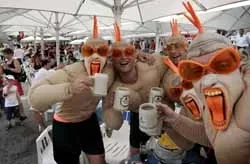
According to the BBC, police officers, who had received orders from FIFA officials, did not allow fans from the Netherlands to enter the Gottlieb Daimler Stadium dressed in their traditional orange outfit. On the leather trousers of some fans – the so-called lederhosen – one of the vigilant football officials spotted the logo of the Dutch beer Bavaria, and advertising of any sponsor other than the official ones is prohibited by the championship regulations. The American company Anheuser Busch, which produces, among other things, the Budweiser brand, which is popular across the ocean, is considered the official sponsor from the brewing industry.
Having discovered carriers of the 'guerrilla' logo with a lion's tail at the entrance to the stadium, FIFA representatives tried to prevent a 'sabotage' against the official sponsor. They demanded that fans wearing orange lederhosen be banned from entering the stands. It is unknown what brand of drink the Dutch fans refreshed themselves with before the match against Côte d'Ivoire – the sponsor's or the 'guerrilla' one – but apparently, they had consumed a fair amount of it. In any case, none of the supporters of Marco van Basten's team had any doubts about what to do.
The fans simply took off their trousers at the entrance and went to watch the game in their underwear. True, someone apparently smuggled the trousers with the tail into the stadium – AP reports that among the 52,000 people in the stands, fans were seen waving this garment.
Perhaps this incident would have gone unnoticed (there are plenty of fans who strip down to their underwear in the stands, especially in the heat that Germany is currently experiencing), if FIFA's leadership had not issued a statement warning all lovers of 'guerrilla' advertising. "FIFA will not dictate to individual fans what to wear to a match, but if thousands of people arrive in identical clothing that advertises a product and will thus appear on television screens, then of course we will not allow that to happen," said FIFA's director of public relations, Markus Siegler.
For their part, representatives of the Dutch Football Federation believe that international officials are making a mountain out of a molehill. The federation's press secretary, Frank Heijzinga, told AP that "we are talking about a very small group of people who wished to dress for the match in this particular way." According to him, the overwhelming majority of Dutch fans came to the stands in trousers and shorts without lion tails and logos. Or in extravagant costumes that carried no advertising message.
However, debates over whether the campaign was planned or the fans really put on lederhosen without a second thought will probably continue for a long time. The executives of Bavaria NV deny the accusations of an illegal attempt to show their logo during one of the most advertising-intensive events and, moreover, reproach FIFA officials for their disrespectful attitude toward fans. "I understand that FIFA has sponsors, but you cannot order people to take off their lederhosen and force them to watch the game in just their underpants," Peer Swinkels, a representative of the company, told Reuters. The Dutch brewers claim that they have already received complaints from fans who have encountered similar restrictions during qualifying matches.