
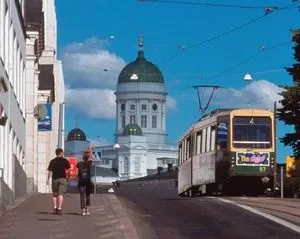
In Ukraine and beyond, there are many admirers of the Finnish company that produces Nokia mobile phones, who value it for the high quality of its products and level of service. And speaking of this country, it should be said that it is extraordinarily beautiful: forests cover three quarters of its entire territory, and there are about 190,000 lakes here.
Finland is also interesting for its higher education, which is free not only for Finnish citizens but also for foreigners. The higher education system here is represented by universities and polytechnics (institutes). Both have their strengths. University education is oriented toward academic knowledge, while education at polytechnics is closer to life and focused on practical tasks.
Polytechnics provide a higher education diploma and bachelor's and master's degrees. Finland's extensive educational network unites 29 polytechnics, many of which are regional universities and offer training in various fields. Polytechnics work in close contact with enterprises and organizations, which provides an opportunity for good practical training in one's specialty. Education up to a bachelor's degree is free.
Citizens of the CIS have the opportunity to enter Finnish universities right after school on the basis of a certificate of complete secondary education. Those who already have initial or complete higher education can have those subjects that coincide with the Finnish university's program credited.
Instruction is conducted mainly in Finnish, but in some universities also in English. Those who wish to study in an international language must provide a TOEFL English language certificate. They have the opportunity to learn Finnish, which is an important factor in finding a job.
In their free time, foreign students can work, but no more than 20 hours per week. Unlimited work is allowed only during vacations. Work can be found of various kinds – both unskilled and related to one's future specialty. On average, students earn about 10 euros per hour. Unfortunately, without knowledge of Finnish, it is very difficult to find a place, so for the initial period of staying in the country, one needs to have means of subsistence.
All students in Finland have discounts. For example, they get a 50 percent discount on transport fares, and there are certain discounts in the student cafeteria; the Internet and library are free. On average, a student needs 400–500 euros per month for living expenses, including housing, food, clothing, health insurance, study aids and materials, and a travel pass.
Upon graduation, graduates receive a European diploma, with which they can find work in any country in the world. Moreover, Finnish enterprises readily invite Russian-speaking graduates of their universities. This is due to the fact that many Finnish companies cooperate with Russia. And if a university graduate has found a stable job, the Finnish migration service will not hinder the extension of his residence permit.
Tatiana POMINCHUK,
Gulfstream Association.