
GREECE - THE LAND OF HEROES
Where does the Mediterranean begin? Looking from the right, it starts with Greece, of course. That fully corresponds to the historical chronology. For it was there four thousand years ago that it all actually began – on Crete, in the city of Knossos, under the watchful eye of the Minotaur, the Minoan culture arose. Travel to Greece is all the more pleasant because between lying on the beach you can see monuments of world civilization, like illustrations to a collection of myths.
Greece is a very large country, especially if you travel through it by train, sail by ship, or walk to a neighboring village. The most common four-language map of Greece reflects the very essence of local geography: on the front side of the map only the mainland part fits, while the islands are drawn on the back.
• Greece has long attracted our compatriots with the opportunity to purchase resort real estate. If you decide to combine sightseeing with choosing a home, you can select properties of interest in advance on specialized portals. For example, on the website www.sea-homes.ru apartments and villas are presented that you can purchase in Greece for investment or for your permanent residence. The choice of real estate here is not limited by price or geographical location of the properties.
About Resorts
Mainland Greece is divided into northern and southern parts. In the south, almost the entire coast of the Aegean Sea, Athens with its surroundings, and the Peloponnese peninsula are resort areas. Athens is not very suitable for leisure. It is a big, noisy, littered port city. (Piraeus is the third largest Mediterranean port after Marseille and Genoa.) Therefore, it is best to relax in its suburbs. The most fashionable resort is Vouliagmeni: sandy beaches, pine forest, a lake with mineral springs, modern hotels. Or nearby, in Glyfada.
Life is much more democratic on the opposite coast of Attica. There are no fashionable resorts, but there are real fishing villages, huge eucalyptus trees, and mountains reminiscent of Crimea. For example, Neo Makri: very clean sea, sand and stones, "psarotavernas" with freshly caught fish, hotels of various star ratings, brotherhood of peoples, unity of souls and aspirations - quickly to the beach! And Athens is 70 kilometers away.
As for the sea: in Greece it is clean almost everywhere, even in the port of Piraeus. The water is especially clear on small islands where there are no sandy beaches. Another pleasant feature: if a hotel is located on the beach, it means it is literally on the beach, not on the "first line" where there are two more roads along the shore... Beach hotels meet European standards and are divided into categories. "A" corresponds to four stars, "B" to three.
In the northern part of the mainland, the most relaxing places are on the Aegean Sea. The names Halkidiki, Thessaloniki, and Katerini are well-known. Halkidiki is a peninsula shaped like a trident. Its main wealth is 500 kilometers of picturesque beaches. The beaches are sandy, very clean, the mountains are completely covered with pines and cedars. The air is thick enough to eat with a spoon. In short, a botanical paradise. Thessaloniki, also called Salonica, is a city deep in the bay, at the head of the peninsula. It is the second largest Greek city, with an airport, a population of 710 thousand people, and various monuments. People go there for shopping tours, for fur coats. In the vicinity there are pleasant places to relax - quiet coves, sandy beaches under pines, etc. The city of Katerini is halfway from Thessaloniki to Mount Olympus. It is not on the sea, so we are talking about its surroundings, which are very picturesque. This is one of the cheapest vacation spots in Greece.
The second part of Greece is the islands. There are many of them - over 1,400, and they are all very different. The most accessible in terms of transport and prices are the large islands: Crete, Evia, Rhodes, and Corfu. Evia is in the Aegean Sea, very close to the coast of Attica, and seems like its mirror image. It is a large island with many resorts and good connections to the mainland (seven ferry lines and a bridge). On Crete, the beaches are rocky; two sandy ones are considered local attractions and are overcrowded. On this island there are both resort towns like Agios Nikolaos, and wonderful villages (for example, Bali), and ancient Venetian cities - Rethymno and Chania.
The Ionian island of Corfu is covered with mountains and forests. Here you can find both lively towns and quiet coves with clear water. The best beaches are in Paleokastritsa.
But the real Greek pearls are the Cyclades scattered in the sea. Their names sound like the whistle of wind in sails: Naxos, Mykonos, Santorini. Their photos adorn calendars: snow-white cubes of houses, blue domes of churches, cliffs, huge seagulls, and the endless sea under the endless sky. In one trip you can see several islands at once, moving from one to another and staying for a night or two in small cozy hotels. This is called a 'Greek island cruise'.
About Heroes
Modern Greece is thoroughly mythological, just like ancient Greece. The Peloponnese peninsula is associated with the name of Heracles: this hero was born near Mycenae, as a child he herded fat flocks in wooded Cithaeron, and here he killed his first lion. He slew the next predator near the city of Nemea, defeated the Hydra at Lerna, the birds with copper claws at Stymphalus, and the boar at Psophis on Mount Erymanthus. All these legendary sites are easy to find on a detailed modern map. To see the birthplace of Heracles, tourists don't even have to get off the bus: a highway passes by the ruined walls of Tiryns. But it is best to see the famous ancient Greek thickets and swamps not near Nemea or Lerna, but near Olympia, where reed thickets are still preserved.
Mycenae impresses with its cyclopean walls and tombs. Here remain the ruins of the Treasury of Atreus, the Lion Gate, and the stone chamber at the entrance where the guard lion was kept. At night the gates were closed, and the lion was let loose to roam the labyrinth around the tombs. They say the ghost of the fearsome beast wandered here for several millennia and still appears on moonless midnights.
One of the most beautiful and romantic ancient Greek monuments is Delphi. The road climbs higher and higher, smoothly tracing the letters of the ancient Greek alphabet. A double-decker bus rushes at bird's height above a flat oval valley; passengers grab their hearts and their neighbors' hands. Mount Parnassus approaches, grows to the size of the sky; curious muses peek out from behind the trees. At the center of the universe, at the height of eagles' circling, amid the eternal chirping of cicadas, lie the ruins of the Temple of Apollo, as large as a small town. The amphitheater of the Small Temple, overgrown with daisies and charlock. The stone seat of Alexander the Great. The stone on which the Pythian prophetess sat. The Castalian spring, whose water grants eternal youth.
The most mythological island of Greece is Crete. Here you can see the ruins of the Palace of Knossos, where the Minotaur lived in the labyrinth, and King Minos, Theseus and Ariadne, Daedalus and Icarus roamed the gardens. From those times ruins of other palaces remain - in Phaistos, Mallia, and Kato Zakro, but they are not very impressive. On Crete you can go to the Lasithi Plateau, where the blades of thousands of windmills spin, and visit the Dikteon Cave, where Zeus was born. The oracle of Crete is in the Samaria Gorge - the deepest in Europe. Next to it stands a small chapel. And around it survive mountain forests that grew on these mountains back in the time of King Minos.
ITALY – THE COUNTRY OF ART
Following Greece with Cyprus comes Italy – historically, geographically, and logically too. If only because in 753 BC Rome was founded. Italy has always been at the center of events, and it is no wonder – its 'boot' points its toe straight into the middle of the Mediterranean Sea. It is surrounded by islands: the substantial Sardinia and Sicily, the small Capri and Ischia, and a whole handful of volcano islands, extinct and active. In all its parts, Italy is a true work of art. Every city is a museum city, every landscape is a painting by Tintoretto or Caravaggio. So you travel through the country – from museum to museum, from painting to painting.
If you have ever drunk fragrant Sangiovese to the music of Verdi, sitting in an old rural trattoria among the hills of Tuscany, you know what Italy is. A happy country of magical dreams, blue skies and striped cabanas on endless beaches, a country of ancient roads laid by the legionaries of Emperor Augustus and Emperor Aurelius, and ever-humming waiters, and smiling girls from mountain villages. Here you can be cured of all diseases on the island of Ischia, dress in the latest fashion in Milan or Florence, meet the Pope in the Vatican, touch the rough stones of the Colosseum, find yourself on the deserted beach of Rimini, where the sunset sky plays out the last scene from a Fellini film.
About the Resorts
In Italy there are as many as five seas: the Adriatic, Ionian, Tyrrhenian, Ligurian, and Mediterranean. The Adriatic coast stretches from Trieste to Bari and scorching Calabria, encompassing the Venetian Lagoon and the Po Delta with all their lakes, canals, ancient abbeys, white herons, and pink flamingos. Vast sandy beaches stretch from Venice to Trieste, proudly bearing the name of the Venetian Riviera. The sea there is shallow, which especially pleases children. The main resorts of the Riviera are Lido di Jesolo and Sottomarina Lido, sharing a narrow spit with little Venice - the town of Chioggia. On Chioggia's coat of arms, as in Venice, a winged lion is displayed, which the Venetians contemptuously call a cat.
Beyond the Po River begins Emilia-Romagna - the most cheerful and lively region of Italy: bright sun, densely populated Adriatic beaches, hot roofs of Rimini and Riccione, the peaks of the Apennines melt in the heat haze, a postcard sky is turned upside down into the sea, rainbows hang in the spray of fountains and children splash. Along the sea stretch resort towns with their beaches, parks and water parks, dolphinariums, discos, and 'Italy in Miniature'. This is a true road of happiness: 150 km of sandy beaches, palm-lined promenades and children's delight, with which we run towards the sea, towards the gentle Adriatic wave.
Rimini - the city of Federico Fellini and Duke Malatesta - is considered the capital of this happy life. On both sides stretches a continuous chain of resorts: elegant Milano Marittima with villas under flat crowns of pines and hotels on the beach. Cesenatico with a canal designed by Leonardo da Vinci and a museum of old fishing boats at the canal mouth. Riccione with fashionable boutiques, whose window displays are updated earlier than in Milan. Luxurious Cattolica with singing fountains – the designer Albert Ferretti is diligently turning it into the best resort in the world. Respectable Pesaro with an ancient Roman stadium, a historic palace, the Rossini Theater, and the house where Rossini was born. They are very different, these resort towns, but they are united by the captivating spirit of true resort life, happy and carefree.
The next region is called Marche. It starts in Pesaro and continues the carefree coast of resorts. It is a land not only of huge sandy beaches and entire blocks of inexpensive hotels, but also of charming old towns with Romanesque arches and Byzantine cathedrals.
Southern Italy is a land of ancient ruins and ancient olives, preserving history, meant for romantics. There mountains rise straight from the sea, and pine groves guard the peace of secluded beaches.
This blessed land lies between Naples and Sicily and is called Calabria. There is a different sun and different people - like all southerners, they are temperamental and hospitable.
Calabria is called the land of long-livers. There, the sea, sun, mountains and pines come together; there, you gain health in a week, and in two you become ten years younger.
The crystal-clear Ionian Sea splashes off the coasts of Apulia and Calabria. This is a protected corner, mysterious and wild places that have preserved traces of many civilizations and cultures. The birthplace of Horace, by the way. There are Doric temples, Norman castles, cave churches, beautiful bays, sandy beaches and moderate prices.
The most elegant seaside resorts are located on the Tyrrhenian coast. For example, Sorrento, hovering on a 50-meter terrace like a balcony over the emerald sea. There are no hotels 'on the beach' here: you have to go down to the water by elevator. The class of a hotel in Sorrento is determined by the view from its windows; the most expensive ones stand on the edge of a cliff or on mountain terraces.
The most prestigious in Italy is considered the Ligurian Riviera. From France to Genoa it is called Riviera di Ponente: slightly shabby but proud Sanremo, Rolls-Royces, croupiers in bow ties, orchids in décolletage, champagne, lush vegetation, sandy beaches, peeling house walls and streets hung with flags of freshly washed laundry.
The Italian islands are very different from each other. Sicily is a continuation of Calabria: lovely little towns, sandy beaches, beautiful Taormina under the shadow of snow-capped Etna. The swimming season lasts until mid-November. Sardinia is self-sufficient and distinctive; it does not even think of considering itself part of Italy.
Ischia is a small green island in the Bay of Naples, a fashionable resort since the time of the Empire with thermal springs and mud. Luxurious hotels, beautiful views, pristine sea.
On art
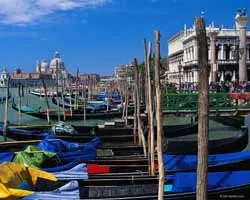
Art reigns everywhere in Italy. Even landscapes beg to be in gilded frames; even peeling house walls are as proud as frescoes. Here is Venice - the most beautiful city on Earth. The best thing is to arrive in Venice by sea, so as not to drive past a monstrous industrial zone or get stuck in a traffic jam on a narrow road.
Another city of art is brilliant Florence, framed by the soft hues of Tuscan hills with black cypress candles and campanile towers on the slopes. In summer it resembles a big bazaar on market day, but in autumn the tourist madness recedes, streets and squares empty, and the city regains its true face. It becomes visible that Florence has fallen asleep on the banks of the Arno like a fairy-tale princess. This city does not need to make an effort to preserve traditions - it is all tradition, all memory of the past and the future. Its stones remember the steps of Dante and the light tread of Beatrice; Michelangelo's chisel and Leonardo's swift pencil left their marks on them. The walls of its ancient churches preserve frescoes by Giotto and coats of arms of long-extinct families, once rich and powerful. A rendezvous with art occurs not only at the Uffizi Gallery and the Pitti Museum. The rendezvous with art continues here continuously, on every street and every square of divine Florence.
The list of Italian art cities is endless: noisy Rome, businesslike Milan, carefree Naples and Genoa climbing up the mountain slopes, luxurious sweltering Palermo and plump Bologna with its medieval towers. And Rimini with the palaces of the Malatesta dukes, and the village of Gradara with the castle of Paolo and Francesca. And the hamlet of Saludecio with painted houses. And hundreds of other small medieval towns and villages where landscapes beg for gilded frames and peeling house walls look like frescoes.