
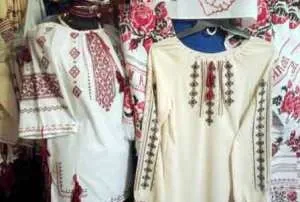
At the beginning, the raw material had to be prepared, then the fibers had to be processed, spun, twisted into threads, woven, then bleached, rolled, beaten, and smoothed. Linen and hemp cloth were the most common materials. Linen cloth is soft, with a fine weave and a grayish-ochre tint. Hemp cloth is greenish-gray and more rigid. There were many techniques for making cloth, with about twenty known types of cloth. If the fabric was intended for embroidery, it was woven with both tighter and looser weaves, and then bleached in the sun, frost, and dew to add luster to the hand-spun threads.
Special varieties of flax with low and thin stems were used for cultivation. Hemp had female and male stems. The male stem matured earlier and was softer. The female stem was coarser; it was pulled out in autumn and tied into bundles, then threshed and soaked for three weeks. Then it had to be dried and beaten with a beetle. Flax, like hemp, was also soaked or spread in a thin layer on a meadow. Ripe flax had to be pulled, threshed, and spread on the meadow.
Flax and hemp were dried in the sun. Then they were scutched – the shive was separated from the fiber. For this, a handful of flax or hemp was divided into parts, scutched, broken, crushed, and rubbed on a hackle (ternitsa). Later, each fiber was given one direction by combing on a hackle. This fiber formed a "kobza, kukla". From such fiber, they pulled strands (mychky) which were carded with a hand card or brush. Hand spinning of flax is the process of preparing fiber for weaving.
Every family was engaged in making fabrics and yarns. They wove tablecloths, towels, and cloth for sewing clothes. Spinning began after the field work was finished. Most often, girls and women wove, but there were also male weavers. The cloth that had been woven and taken off the loom had to be rinsed in room-temperature water and dried, and then the rinsing-drying process was repeated three times. Then, holding the wet cloth on outstretched arms, they rolled a glass ball and ironed it.
Nowadays, ancient weaving techniques are almost forgotten, but there are still craftswomen who preserve folk traditions and revive Ukrainian crafts.
Author – http:\/\/etnodim.com.ua<\/a><\/p>